



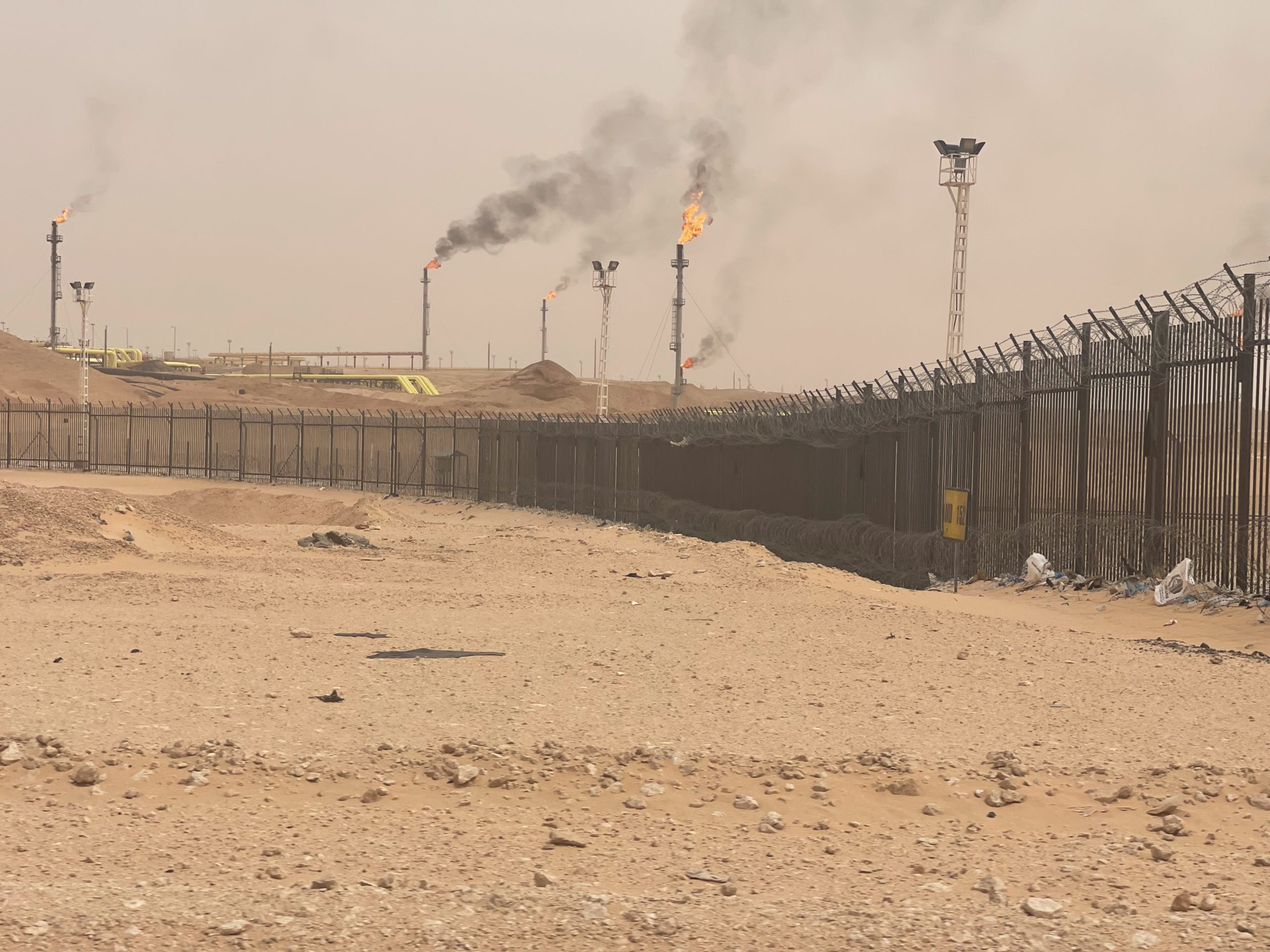
In the decolonization imaginary, sovereignty looks like a gesture, that of a flag being raised, a proclaimed anthem or a signed decree. In the real life of rentier states, however, it more often resembles a binder full of concessions, appendices, tax schedules, “conventional” prices, penalty clauses, litigations and exequaturs. Algeria learned it early, often at its own expense, sometimes to the benefit of those it just kicked out. France, for its part, had learned before many others that you can lose an empire and preserve an influence by transforming the latter into a judicial architecture.
The pages told by Sonatrach, histoire secrète des arbitrages, recently published by Éditions El Bayt, not only describe a bilateral relation, they recount a method shift. In the 1960s and 70s, Algeria was building a strategist state that nationalizes, plans, oversees and wins trials. In the 2010s, the same country appeared to sometimes behave as a hesitant state, conceding, renouncing, reinstating and paying to shut down cases, as if sovereignty had become a negotiable option, or a political adjustment lever. Between the two moments, France was not always the dominant player, but has remained the constant actor, the one that knows how to play on timespan, law, and above all on the institutional failures of others.
The “compatible” sovereignty
It all begins with a text that appears reassuring, namely, the Franco-Algerian agreement of July 29, 1965. Its actual purpose is far more specific: to secure the Algerian Sahara at a time when Paris feared that independence would lead to a total economic break.
At the heart of the agreement lies a simple and almost cynical idea: continuity. The Saharan concessions dating from before 1965 – including fifty-year terms, the 1958 Saharan Petroleum Code, and the stipulations of the Evian Accords – are renewed. Algeria becomes sovereign in rhetoric, yet exploitation continues in law. The post-colonial world begins with a renewal clause.
To avoid the appearance of a guardianship, the agreement offers Algiers a heavier tax burden through the elimination of inherited advantages and a progressive increase to a 55% tax on profits, a significant rise in the charge per ton. At first glance, the Algerian State has won. Upon second reading, the essential point becomes clear: the tax base relies on a conventional price, meaning a stabilized ‘petro-franc.’ Taxation thus becomes a tool for pacification, as it corrects without overturning and redistributes without destabilizing. In other words, it transforms sovereignty into budgetary discipline rather than a political weapon.
Cooperation, too, is strictly framed. There is an upstream joint partnership and a dense regulatory framework, yet the downstream remains out of scope. Refining and distribution continue to be French spheres of influence. In extractive industries, economic rent stems only marginally from drilling; it results primarily from market access, the control of flows, and the ability to convert a barrel into economic power. The 1965 agreement shares the upstream but retains the downstream.
The case of gas illustrates the sophistication of this system. Algeria obtains formal recognition of its sovereignty, but this sovereignty is exercised within a golden cage: an obligation to sell to the State at a price covering costs, taxes, and return on capital, the renewal of existing contracts, joint-venture structures, and bilateral purchase commitments. Gas becomes less of a resource and more of a diplomatic bond. While Algeria exercises control over its subsoil, it remains dependent on the customer, whereas France accepts the principle of sovereignty provided it retains operational control.
In this landscape, French ‘aid’ plays an even more effective role because it presents itself as neutral: loans, credits, Coface [export insurance], and technical assistance. But aid is not a gift; it is a lever for co-decision. By financing, one steers. Consequently, the fledgling economy equips itself according to standards compatible with the interests of the financier. Sovereignty is recognized, provided there is stability.
Zarzaïtine shows that sovereignty begins with a pressure gauge
If the 1965 agreement is the art of the locking-in, Zarzaïtine is the art of the awakening. The conflict is not primarily ideological. It stems from a trivial phenomenon: a mismanaged reservoir that is deteriorating, leaving the oil trapped in the subsoil. In the Algeria of the early 1960s, sovereignty is not measured by speeches, but by reservoir pressure, decline curves, and water and gas injection.
Zarzaïtine was discovered in 1958 and put into production in 1960. Its geological characteristics demanded caution and conservation. Young Algerian executives suspected that CREPS, the French operator, was prioritizing a logic of rapid maximization. Pressure dropped dangerously. The risk was irreversible, for a field that has been overexploited cannot be ‘renationalized’; it is simply lost.
What makes this episode foundational is how Algeria learned to defend itself through evidence. Old technical reports, written by the French administration itself, showed that the risks were known. Sovereignty became a matter of documents, archives, and calculations. Algerian engineers demanded an independent American expert assessment, paid for by the operators. The report confirmed their fears. The French response said it all: they continued as if nothing were wrong, minimizing volumes and delaying the problem’s resolution. Worse still, Algeria suspected falsification, concealment, and the doctoring of data. The technical battle transformed into a legal one.
Zarzaïtine pushed the Algerian state to cross a threshold by resorting to international arbitration. For a country just emerging from war and an administrative vacuum, this was a leap into the arena of global law. Negotiations dragged on, stalled, and became politicized. Meanwhile, the 1965 agreement, intended to stabilize the situation, dealt primarily with the surface: taxation, concessions, and bilateral balance. The heart of the conflict, the preservation of the reservoir, remained sidelined. Diplomacy took precedence over geology.
The matter would only truly be resolved in 1971 with the nationalization of hydrocarbons. Here again, the book invites a less romantic reading, showing that nationalization was not merely a gesture of sovereignty, it was a response to an impasse. When compromise protects neither the resource nor the national interest, a break becomes pragmatic. Algeria inverted the power dynamic, forced the companies to accept a new foundation, settled outstanding disputes, and established a doctrine: true independence is won through technical mastery and legal robustness.
Beyond oil, “everything else”
The ‘Boumédiène moment’ is often summarized by oil alone. This overlooks the fact that for a state with strategic ambitions, sovereignty cannot be sectoral. A planned economy does not delegate its insurance, does not abandon its mines, and does not leave its land without status.
The case of insurance is revealing in its cold pragmatism. As early as 1963, the CAAR imposed mandatory reinsurance. In 1975, full nationalization followed: UAP, AGF, La Préservatrice, La Séquanaise, La Providence, and French maritime insurers exited through withdrawal, absorption, or nationalization. Most notably, there was no major litigation. French insurers did not trigger a legal war. They understood this was not an ideological raid, but state logic: covering strategic risks is a sovereign prerogative.
Mines followed the same trajectory. The 1966 Ordinance, nationalization of the main mining companies, and their placement under state control, first BAREM, then SONAREM. The narrative lists the sites – Ouenza, Boukhadra, Gara Djebilet, Sidi Kamber, COMIPHOS – as if taking inventory of an inheritance long exploited for the benefit of European industrial circuits. Here again, the goal was not to humiliate the former operator, but to anchor a value chain. The 1970s launched structural projects, modernization, and value enhancement: sovereignty became industrialization.
Land, finally, is the last frontier of economic decolonization. At independence, nearly 2.5 million hectares belonged to French settlers. Their departure left a vacuum. The State filled this void through self-management (autogestion), then through the doctrine of ‘vacant property’ (biens vacants): the ordinances of 1962 and 1963, management offices, and finally the Agrarian Revolution of 1971. In total, nearly 3.4 million hectares were integrated into the State domain and redistributed. France did not react. This silence was more than mere fatigue, it constituted an implicit recognition that Algerian sovereignty was no longer negotiable.
Giscard in Algiers: a recognition without result
When Giscard d’Estaing arrives in Algiers in April 1975, the visit is historical, but the reality behind it even more so, for Paris is ratifying what it can no longer prevent. Every phrase is weighed. ‘Historical France salutes independent Algeria,’ says Giscard. Boumédiène responds: ‘The page is turned; Algeria is the daughter of her own history.’ The dialogue is solemn, respectful, almost pedagogical. It carries a tacit message: the economic disputes of the past will not be renegotiated in retrospect.
France, from then on, chooses a more modern strategy: cooperating on gas, engineering, and infrastructure, but within an Algerian framework. Algeria, for its part, insists on balance, technology transfer, training, and respect for economic sovereignty. This period resembles a turning point: after the shock of nationalizations, a partnership is possible, provided the power dynamic has been clarified.
Yet, this is precisely what makes subsequent episodes so troubling: for a time, Algeria learned how to clarify, then, at times, it ceased to do so.
Technip–Asmidal: when litigation (also) serves the state
The Technip affair of the 1970s–1990s serves as a useful counterpoint to contemporary narratives: it shows an Algeria capable of defeating a French company on the most sophisticated legal terrain, the very ground where it is often assumed that multinationals hold the advantage.
The dispute arose from industrial contracts in which Technip committed to financing and building fertilizer plants in Arzew and Annaba for Asmidal, with repayment by Sonatrach. Non-compliant work, substandard materials, and repeated delays pushed the matter into the legal arena. An arbitration procedure was registered in Zurich in 1977 and then suspended, a sign of stalling tactics, perhaps waiting for a political shift.
In the 1990s, the case returned before an arbitral tribunal of a highly symbolic nature, composed of Pierre Poudret, Yves Loussouarn, and Mohammed Bedjaoui. Between Swiss law, French doctrine, and Algerian sensitivity to economic sovereignty, the case appeared as a miniature of legal globalization. The verdict rendered in 1996 was unambiguous: Technip was found liable, and Asmidal was indemnified. The French company challenged the ruling in France, citing international public policy, the right to a fair hearing (principe du contradictoire), and jurisdiction. It lost. In 1998, the Paris Court of Appeal confirmed the exequatur. Algeria won in the adversary’s ‘home’, in the very capital of law it had once feared.
The lesson of that era is foundational: sovereignty is not limited to nationalizing; it consists of holding a line, documenting, litigating, and executing. Law becomes an extension of strategy.
And yet, half a century later, the narrative shifts; what was once a matter of discipline has become hesitation.
Total and the art of benefiting from an exhausted state
In the TFT (Tin Fouyé Tabankort) case, Total does not return as a conqueror, but as an opportunist. The production-sharing contract signed in 1996 was set to expire in 2019. Sonatrach was in a position of strength. Legally, any renewal required compliance with the 2013 law. Economically, the field was profitable. And strategically, unconventional reserves whetted the appetite.
The method described in the book is that of an actor seeking to ‘have their cake and eat it too’, refusing to pay an entry fee, limiting the scope of declared reserves, and targeting shale gas while maintaining old conditions. On the other side, Sonatrach proposed a balanced formula based on a moderate tax for reserve access, an exploitation right linked to treated volumes, and additional gains for the State without compromising the partners’ profitability. Rationality existed; it simply was not enough.
The turning point was political, with the appointment of Abdelmoumen Ould Kaddour to head Sonatrach. The patiently negotiated architecture was dismantled, and taxes were revised downward. The result: an estimated loss of nearly $50 million for the State, while the partners pocketed more. Meanwhile, reservoir preservation obligations were ignored, a seemingly technical detail, but in reality a time bomb, for final recovery is often determined by these invisible choices.
The Ahnet case drives the point home. Total abandoned a strategic gas project without paying a penalty, despite a clause stipulating $100 million in compensation. No one demanded enforcement. The State that had learned, at Zarzaïtine, that sovereignty begins with technical and contractual rigor, suddenly behaved as if the clause were mere window dressing.
The sharpest irony is historical: the Windfall Profit Tax (TPE), which Total and Repsol were contesting, was validated by arbitration in 2016. Algeria had won. Yet, it gained nothing from it. It won in court and lost at the table.
It is not that Total was legally irresistible. It is that the weakness on the other side was no longer legal, but institutional. A State can have the best arguments and choose not to use them. Sovereignty is then lost not by expropriation, but by concession.
The Algiers refinery: when engineering becomes a diplomacy
The tragedy of the Algiers refinery pushes this logic to its paroxysm. In 2010, Technip secured a $908 million contract to rehabilitate the refinery within 38 months. There were no irregularities in the awarding of the contract; that was not the problem. The issue lay within an ecosystem marked by a dependence on foreign expertise, unstable governance, and a contractor’s ability to transform state flaws into contractual advantages.
Technip, which had little experience in refinery renovation, mandated a total shutdown during the works. This was a costly choice, as every day of stoppage fueled fuel imports. Delays accumulated. Essential equipment was missing. Most importantly, the consulting engineer EIL, supposed to protect Sonatrach, found itself being paid by Technip, a conflict of interest that turned expertise into an instrument of entrapment. Neutrality became complicity.
Between 2010 and 2017, governance fragmented with three Ministers of Energy, six Sonatrach CEOs, and three Vice Presidents for downstream operations. Technip adapted its narrative to each new interlocutor. The strategy was simple: stall, invoke the refinery’s obsolescence, the complexity of the site, or the depreciation of the dinar, until the State was faced with a binary choice: concede or lose everything already invested.
A brief resurgence occurred in 2015 when Amine Mazouzi terminated the contract and launched an arbitration claim for $2 billion. For a moment, the State became a strategist again. Then the political machinery took over; Akli Remini was ousted and Mazouzi replaced by Ould Kaddour. The file was then completely turned on its head: the arbitration was abandoned, EIL was indemnified to the tune of $20 million, Technip was reinstated as consulting engineer for $8 million, and the dispute was closed.
The outcome is almost too perfect to be true: the struggling contractor recovers the market, the national company waives massive compensation, competent executives are marginalized, the refinery remains only ‘partially’ functional, and imports continue. Technip did not win through technique, but through politics, or rather, through the way politics neutralized the law.
What France understood, what Algeria sometimes forgot
It would be tempting to read this history as a simple duel between a predatory France and a victimized Algeria. Yet the book tells a more interesting story: that of a methodical France facing a variable Algeria.
The French method is stable; it rests on securing, stabilizing, and contractualizing. In the 1960s, this approach led to the 1965 agreement, a true masterpiece of ‘framed sovereignty.’ In the 2010s, this method took the form of a corporate strategy based on exploiting governance flaws, obtaining concessions, and transforming cooperation into dependency. Political France often stays in the background, allowing its industrial champions to occupy the space using modern tools such as influence, pressure, arbitration, communication, and ‘partnership.’
The variable is the Algerian State. When it is coherent, as at Zarzaïtine, in 1971, in 1975, or in the Technip–Asmidal case, the State imposes a line based on technical mastery, the legal framework, the execution of clauses, and the defense of the long term. When it fragments, as in the Total/TFT, Ahnet, or Algiers refinery cases, this line dilutes, decisions become personal, strategy shortens, and law fades behind the political management of the moment.
Sovereignty, at its core, is not a property; it is a practice. It must be understood not as a trophy, but as a muscle that begins to atrophy the moment it is no longer exercised. Algeria had strengthened this muscle through planning, nationalization, and legal training. It has sometimes allowed it to relax, to the point of letting penalty clauses sleep, arbitrations die, contractors return as ‘partners,’ and public losses transform into ‘compromises.
A moral lesson for rentier states
The Franco-Algerian history of hydrocarbons is not an exotic singularity. It is a parable of resource capitalism. Rentier states often believe that sovereignty is played out in the level of participation, the percentage of taxation, or the ownership of the subsoil. It is actually played out elsewhere: in the capacity to maintain institutional memory, to protect expertise from capture, to enforce a clause, to uphold a doctrine across multiple mandates, and to resist the ‘quick’ solutions that prove costly over a decade.
The pioneers of Zarzaïtine understood that sovereignty begins with figures and ends in court. The 2010s reveal a harder truth: that of a sovereignty that can be extinguished in a meeting room, for lack of readers attentive to the very last page of the contract. If one were to retain a single formula, it would be this: one does not lose sovereignty when signing a bad agreement, but when one ceases to demand that signed agreements be applied. In this part of the world, as elsewhere, the difference between a partner and a predator sometimes comes down to just one thing: the solidity of the signer.
Sonatrach, histoire secrète des arbitrages, by Yacine Merzougui, undertakes a rare exercise by transforming the often opaque mass of technical disputes into a political radiography of Algeria’s most strategic institution. The book does not limit itself to disputes with French companies, though these occupy a central place due to their hyper-politicization, but draws an uncompromising portrait of an oil state facing multiple adversaries; a state that long sought to play chess with the global giants of the sector, only to sometimes find itself reduced to defending its king bare-handed.

