


2020. 2022. 2023. 2024. 2026. Covid. Ukraine. Gaza. The Red Sea. Hormuz.
Hospitals overwhelmed. Pipelines shut. A territory sealed off. A shipping lane blocked. Now a strait. Or already two… Five dates. Five shocks. Five crises… No. One. Enough picking at the bugs one by one. It is time to read the code.
A grid. A common structure beneath all the noise. Crises are merely the froth. The visible surface of deeper currents. This grid is a map. Not of geography. A map of all that is possible. What flows – men, the sick, soldiers, oil, money – moves across this grid. But nothing here moves by chance. Everything passes through pipes connecting each point. These pipes are constraints. This machine dictates what we can do tomorrow that we could not do yesterday.
This machine relies on only three moving parts. A possibility space. The map. With its situations and paths. A traveller. A human being, a vaccine, a dollar, an idea. What matters is that it occupies a situation and pursues a goal. An actualisation. The transition from potential to reality. When the traveller tries to move, the grid shifts beneath their feet. Movement is merely one form of actualisation among many. Actualisations accumulate and the machine starts to keep count. It records its past. It calculates its future.
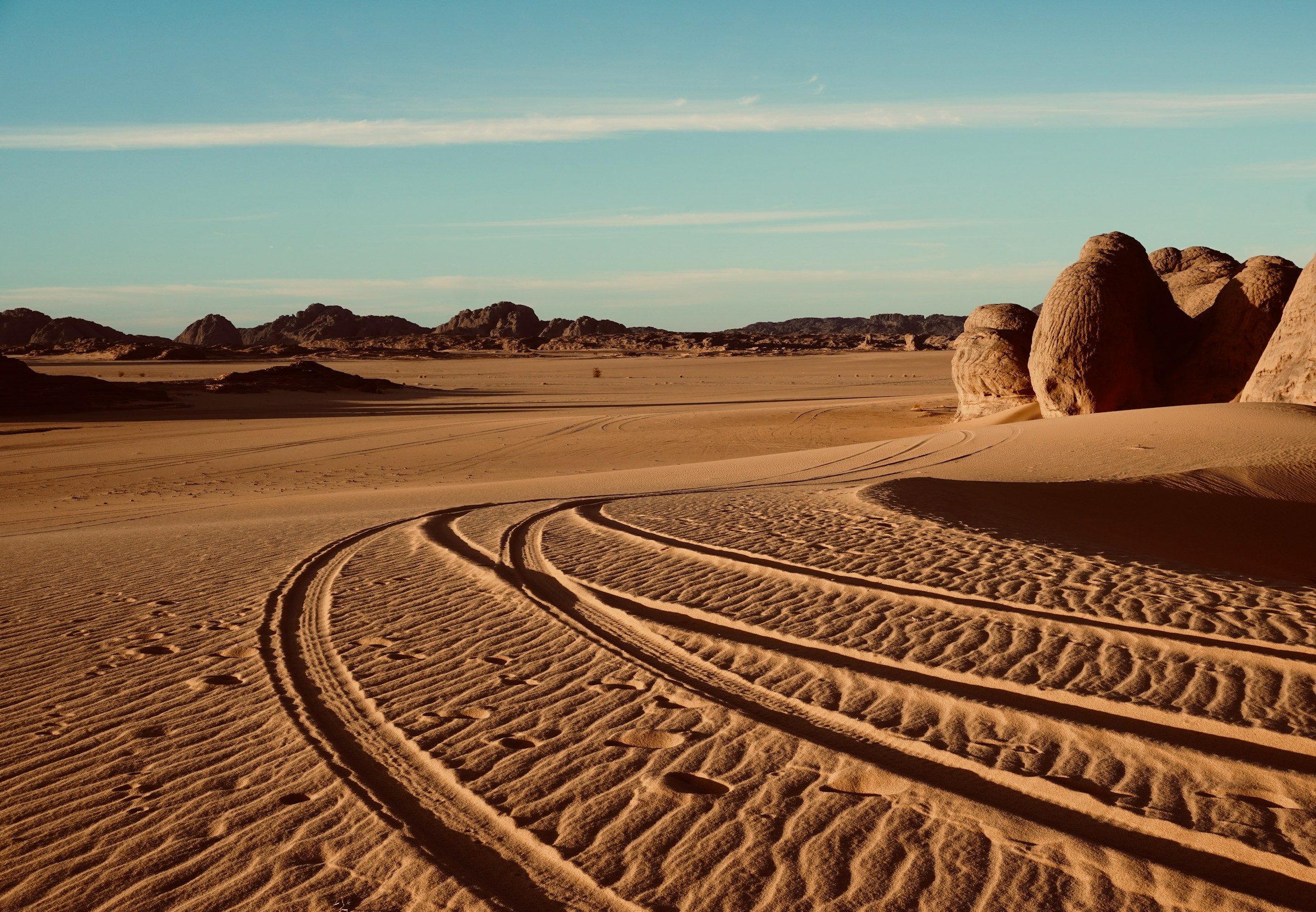
Nord Stream explodes? A pipe vanishes from the map. Gas no longer flows. The explosion has been actualised. The horizon of the possible is reconfigured. The machine has its own rules. Structured relationships between things. And these relationships give the world its shapes. Sand is not the desert. The desert is the arrangement of the sand. How it can move. What can shape it. Reconfigure the grid, a sandpit appears. Reconfigure it again, you get glass. Again? A microchip.
Let us use this machine to simulate a geo-economic space. States travel within it from one situation to another. But their movements are not neutral. Every movement reconfigures the possibility space. And states do not settle for merely moving. They seek to actualise other events. Redraw the board in their favour.
The ideology of the single path
The problem does not come from these events. Certain travellers tried to cheat the machine. Break free from constraints. Reach the end of history. Optimise a single path. Then close all the others. Actualise a single reality. The Wall fell. Globalisation was then supposed to replace it. The great convergence. Francis Fukuyama, in an essay that became the operating system of an entire generation, laid out the vision. Liberal democracy as the goal. The neoliberal market as the path. The game was over. No alternative. Nothing left to decide.
The machine did not react. It is inert. No desires, no wants. Only relentless, indifferent algorithms.
While the optimal path defined by the international division of labour gained ground, everyone ignored what was happening to the other paths. For Algeria, this meant a blind hyper-specialisation in hydrocarbons. A blast furnace extinguished. Assembly lines halted. Laboratories emptied. Nothing sustains itself on its own. Everything that holds, holds because we tend and maintain it. A large part of the planet took this single path. In different forms. But always that same path.
We optimised for fragility. Today, we are starting to pay the price. Nord Stream explodes? European industry threatened. New suppliers must be found. In haste.
Endogenous collapse
A field of ruins has overlaid the possibility space. No cataclysm. Nothing was consciously destroyed. But the alternatives were all spent. Abandoned paths became unfordable. Beneath our feet, certain situations still hold. But as we try to move forward, we feel them give way. One slips first. Then ten. Finance? Debt chains unravel in silence. Supply chains? Just-in-time, that marvel of efficiency, collapses at every Red Sea disruption. A pandemic? Each country competes for vaccines. Coordination institutions? Brushed aside. Ukraine. Gaza. Hormuz. Bab el-Mandeb. Agriculture. Biodiversity. The climate… Each day, new paths collapse, weary of their overexploitation or their neglect.
These crises are not acts of God. We ourselves wrote our future before the mektoub came to record it. It is situations emptying in the blindness of optimisation. Without a sound. Without a war. Without a day when someone woke up and said “today, we have lost this path”. The void is not an accident along the way. It is the landscape.
Are we doomed to this endogenous collapse? Some speak of a long descent. It ignores the brushstrokes of colours still splashing across the horizon. New paths to build. Should we accept the effort of tracing them. In this geo-economic space, we have a few dashboard controls to take back control. Three. Precisely. They have a name. The constraint operators.
Three dashboard controls
Access. A switch. It lets you through. Or it doesn’t. It calculates nothing. It registers. It defines whether the path is admissible for the traveller. A border closes. A patent is granted. Often binary. Always merciless.
Friction. A dial. It determines whether the path is fordable for the traveller. It gauges what the passage costs. Or what it yields. Time. Money. Risk. It often rises slowly. Especially on neglected paths. Sometimes gentle. Sometimes severe. Always relentless.
Elasticity. A circuit breaker. It sets how much the machine can absorb. It cannot be seen. It must be measured. It defines whether the path is endurable for the traveller. Alternative paths. Strategic stocks. Foreign exchange reserves. While it holds, the system can absorb the shock. When it trips, every crisis burns out its circuits.
Three levers. One circuit. Wired together by feedback loops. Touch one, the other two move. They form the three moments of an actualisation. Before. During. After. Every event is read through three questions. Which paths exist? Which ones can be forded? What will be left after the traversal? A transition. No other moment. And no other lever. Always the same three buttons. Everywhere. And all the time…
Forging a new path
A system that can be measured can finally be read. Navigated. Held to a course. For Algeria’s vessel, there perhaps exists in the distance, hidden within the horizon of present torments, a secret snaking, shimmering trail. The Sahelocracy. Neither thalassocracy nor tellurocracy. Thalassocracy is power through the sea. Empires that control maritime routes, straits, chokepoints. Those who rule by closing off access to others. Tellurocracy is the power through the land. Empires that control continental masses, plains, rivers. Those who rule by weighing down the friction of their neighbours.
The Sahelocracy, from the Arabic Sahel meaning shore, invites us to blaze a third way. Power through the shore. Where sea meets land. Trading without dominating. Actualising our future by creating our own elasticity. And that of others.
To take this concealed path, one must learn to tame the constraint operators. New principles of economic design can guide us. Three principles. Three verbs that must be conjugated in the future tense. Aim access. Choose paths according to their quality. Not their profitability alone. Forge friction. Look beyond mere costs and revenues. Articulate their structure. Engineer elasticity. Stop piling up reserves. Prefer a woven texture.
The key to this endeavour is to understand the machine that makes them operable. Draw its initial outline. Learn to read its code. Familiarise ourselves with its controls. Meanwhile, the machine keeps turning. And situations keep emptying. But its indifference is not a fatality. It is an invitation to lucidity. If these principles of economic design prove fruitful, it means we hold a compass. Behind us, erased paths. Ahead, shifting sands. And between the two, a needle to finally set our course.
This article draws on two works. Hormuz in North Africa: The War for the Operators sets out the analytical framework and applies it to the Maghreb: https://rosaluxna.org/publications/hormuz-in-north-africa-the-war-for-the-operators/. Endogenous Collapse: Optimising for Fragility | The First Theorem of Possibility Space Theory (PST) formalises it mathematically: https://zenodo.org/records/23086320. This article tells it.

